
City launch
A focused site and service structure for one priority city or a deliberately limited local market.
Explore this levelLOCAL PAGES. A BIGGER TOMORROW.
Build a pSEO system for the states, cities and search markets where you want to win.
One country. Fifty states. Thousands of local opportunities.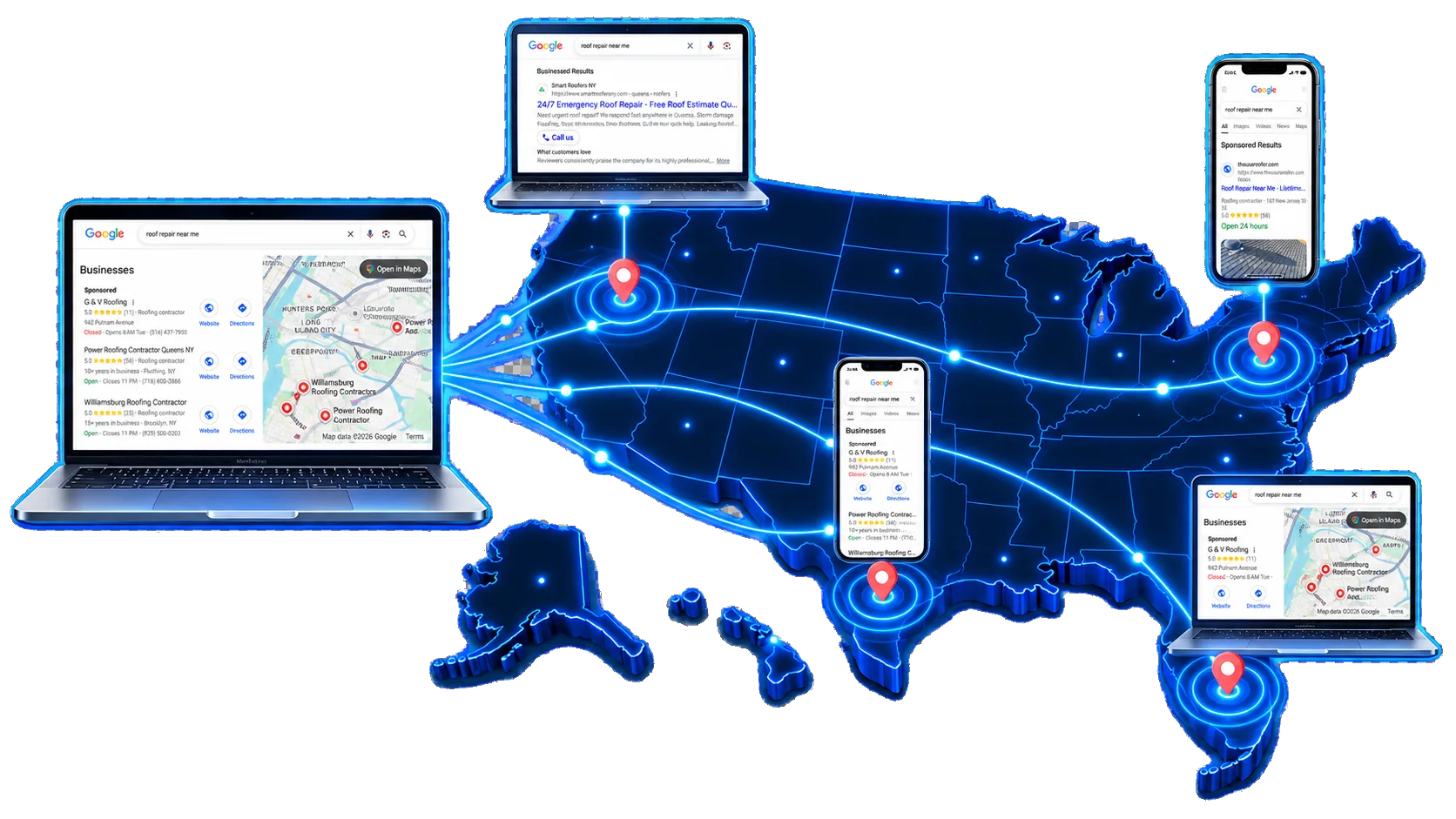
From one country to multiple markets, build pSEO around the territory and language where you want to grow.
ONE WEBSITE. A SYSTEM THAT CAN GROW.
We design an original website around your offer, then give it the structure to grow into cities, regions, countries and languages when your business is ready. It is not a collection of separate websites. It is one connected platform.
HOW FAR CAN IT GROW?
Begin locally, expand with proof and keep every visitor on a path that makes sense.
A focused site and service structure for one priority city or a deliberately limited local market.
Explore this levelA controlled system for multiple approved service areas that still gives each customer a clear route to the right information.
Explore this levelA national pSEO structure that connects country-level authority, regional relevance and local customer paths.
Explore this levelOne connected web and pSEO system for businesses that need to enter approved markets while keeping offer, language and governance clear.
Explore this levelA language-aware website system that keeps terminology, layout, content review and conversion paths connected to the target market.
Explore this levelHOW IT WORKS
One-time build. You own the system. No forced monthly SEO retainer.
United States, one country, a region or a deliberately limited market mix.
Align services, territories, locations and languages around real buyer intent.
Create page families with context and a clear customer path — never empty volume.
Deliver a fast static-first foundation with a reviewable technical structure.
Your team keeps the system and can extend it as real markets become ready.
REAL-WORLD WEBSITE BUILDING BLOCKS
Before a business expands into new markets, its core website needs to explain the offer, build confidence and make the next action obvious. These are the practical website patterns that make later expansion useful.

Clear offer → service architecture → enquiry path

Urgent need → local service → booking route

Service proof → estimate request → qualified conversation

System need → service category → practical next step

Category → market context → relevant provider route

Capability → application → commercial discussion
STARTING INVESTMENTS
Starting investments in USD for an original website and pSEO foundation. Industry complexity, additional markets, languages and integrations are scoped before work begins.
A focused website and pSEO foundation for one approved city or deliberately limited local market.
A regional structure for several approved cities or a defined service area with a shared customer journey.
A national website and pSEO system that links country-level authority to useful regional and local destinations.
See pricing for 3-state, 3-country, continental and global programmes. Commercial terms are confirmed in writing; this website does not process payment.
BUILT TO LAST
We build scalable search infrastructure. We do not sell empty page volume.
NEXT MARKET
One state, a region, a country or the world — we will map the right pSEO system for your offer.
Project briefs can be submitted only after a secure routing endpoint is configured.
EXPANSION PRINCIPLES
These practical layers connect the real business, the market and the visitor journey before a new route is published.
Define the service, intended customer and commercial question before any market route is considered.
Include only territories the responsible business can genuinely support and explain.
Map the visitor question each page should answer instead of producing interchangeable location labels.
Use facts, terminology and visuals that can be reviewed by the people who own the market.
Connect each destination to an appropriate next step and the related information visitors need.
Add new combinations through an approval process that protects accuracy and maintainability.
DECISIONS BEFORE SCALE
The system starts with the decisions that protect relevance, delivery reality and a clear customer path.
No. Each structure starts with a real offer, commercial territory, language and conversion path. A location is not added simply because it exists.
Yes, where the commercial offer, language ownership and local content requirements are confirmed. RTL treatment can be planned when it is genuinely needed.
No. Search performance depends on factors outside a website platform’s control. The work focuses on useful structure, local relevance and technical quality.
We review the offer, geography, languages, page types and operating constraints, then confirm an implementation scope in writing.
The first market is selected from delivery reality, commercial value, existing demand signals and the team’s ability to support customers there. A larger page count is not automatically a better first phase.
Yes. A deliberately limited market can be the right way to validate the structure, local content process and customer journey before a broader rollout.
The information architecture maps a real service to the territories where it is offered, then gives every page a clear role in the hierarchy and a relevant next step for the visitor.
No. A useful page family needs controlled variation, local context and a reason for the page to exist. Repeating a place name across near-identical pages is not the goal.
Often, yes. We review the current information architecture, technical constraints and ownership model before recommending whether the pSEO system should extend the site or remain a separate scoped build.
The ownership and handover model are agreed in the written scope. The aim is a reviewable system your team can understand, maintain and expand as approved markets become ready.
It answers a genuine customer question using a supported offer, a meaningful market context and a clear next step. A changed place name alone is not enough.
Every route has an explicit role, source inputs, relationship to nearby pages and an approval boundary. Unsupported or repetitive combinations stay out of the system.